Why we did this
EGAKU's anime models have offered styles such as Woodblock print and Ink wash for a while. Under the hood, though, those presets only added a few style words to your prompt. When we lined up the same prompt with and without them, the picture barely changed: it was still a clean anime illustration with a little texture on top.
So we trained small style models of our own, one per style, and connected them to four presets: Woodblock print (ukiyo-e), Ink wash, Art Nouveau and a new Impressionism preset.
Trained only on public-domain art
We did not use images from the web at large, and we did not use anything made on EGAKU. Each style model learned from about 700 prints or paintings that are in the public domain or released under CC0, chosen from an open collection that only contains such works.
- No single artist dominates. We capped each artist at 120 works, so the woodblock style is not one painter's style.
- Names were removed. We took artist names out of the descriptions the model learns from, so it learns the look, not a name to imitate.
- People in the training images are adults only. We excluded every image whose description mentioned a child, and every image with nudity.
Before and after
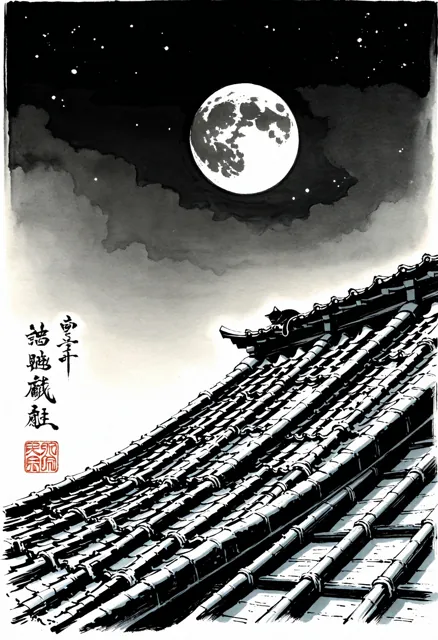
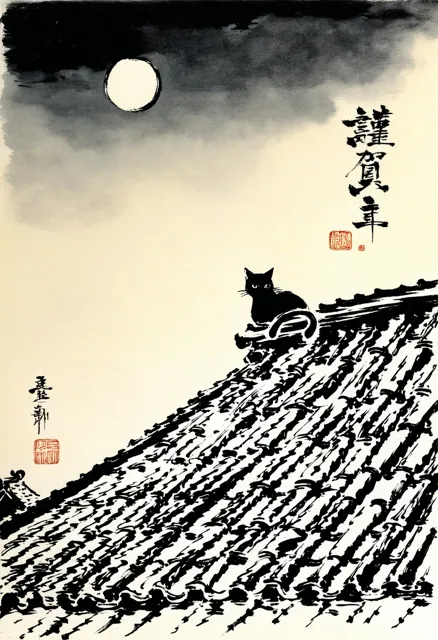
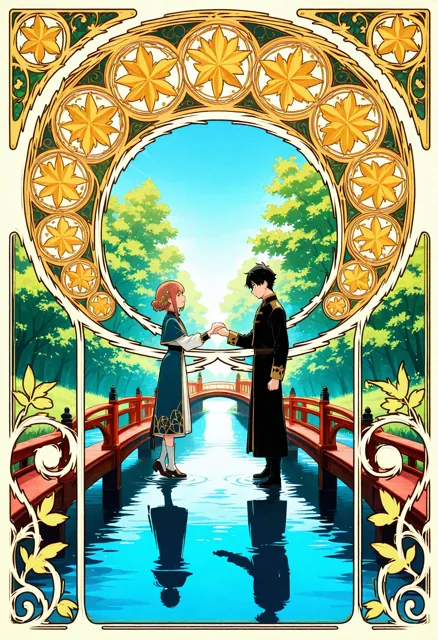
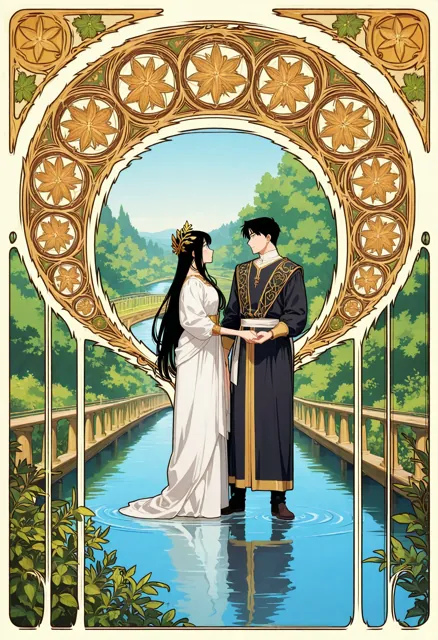
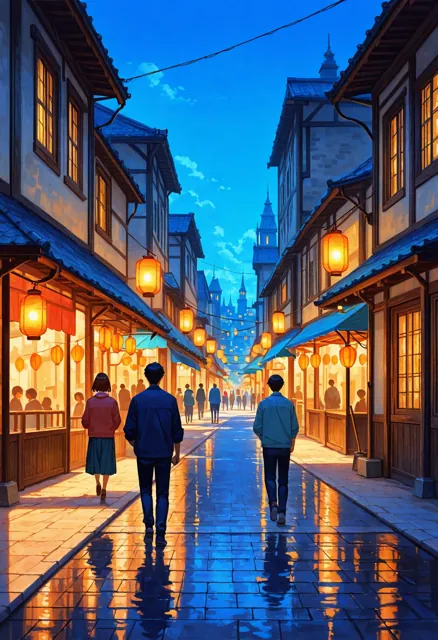
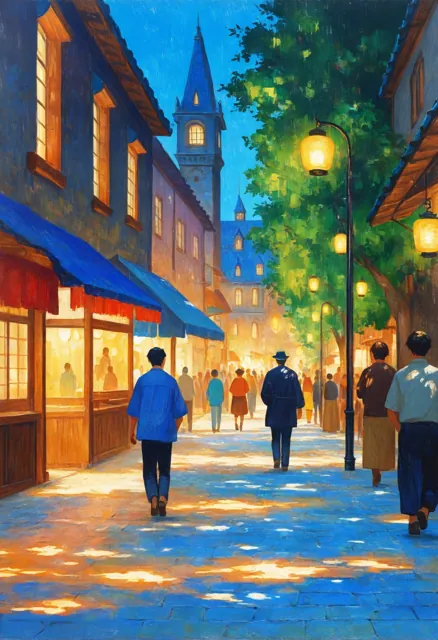
Same prompt, same seed, only the style model added.
Woodblock print: indigo skies, vermilion railings, kimono patterns and the flat printed colour of real prints.
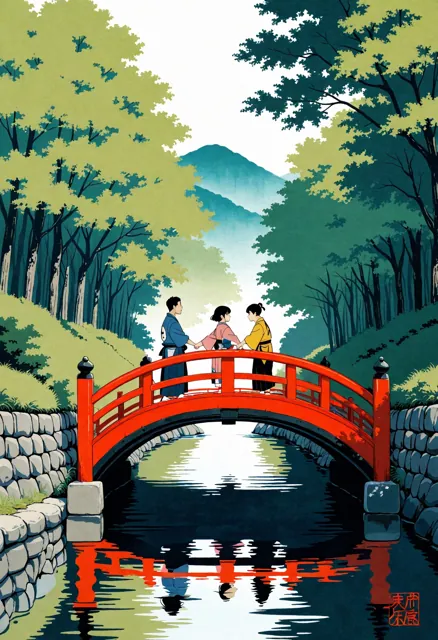
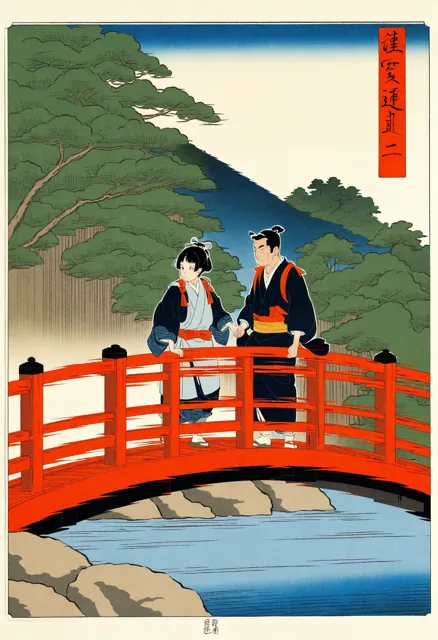
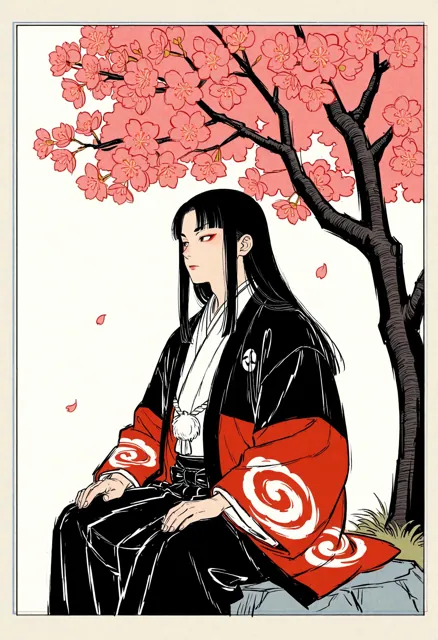
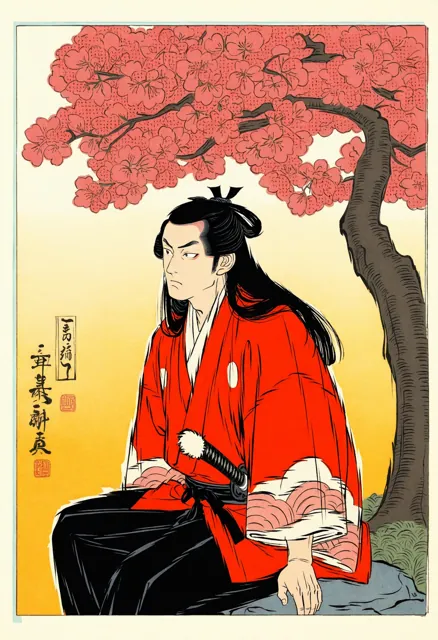
Ink wash: bleeding ink, empty space and paper tone instead of solid black and white.
Art Nouveau: the old preset already drew an ornamental frame; the new model adds the colour and paper texture of the posters.
Impressionism (new): dappled light, visible brush strokes and soft edges.
Stronger was not better
Turned up high, the style models start to overrule your prompt. In the ink wash test, two people on a bridge became one. The woodblock model, which saw many kabuki actor prints, turned a woman adventurer into a male actor's face.
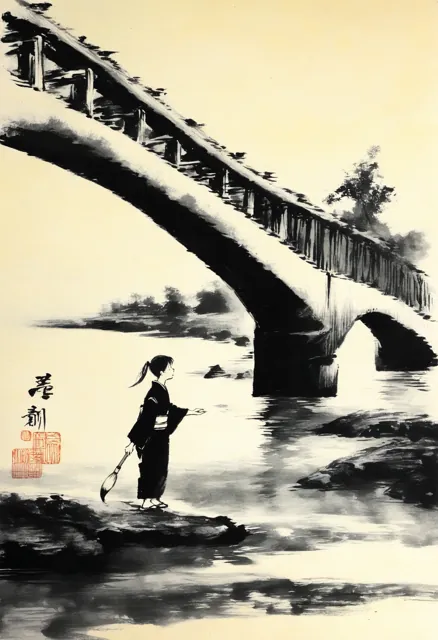
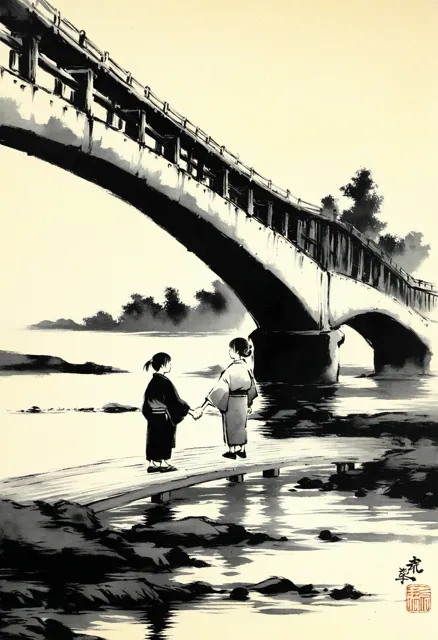
For each style we tried four strengths on five different subjects and chose the strongest setting that still kept what was asked for: the right number of people, the right subject. One limit remains: in the woodblock style, a cat still tends to turn into a person, because there are almost no cats in the prints it learned from.
Fewer extra arms and legs
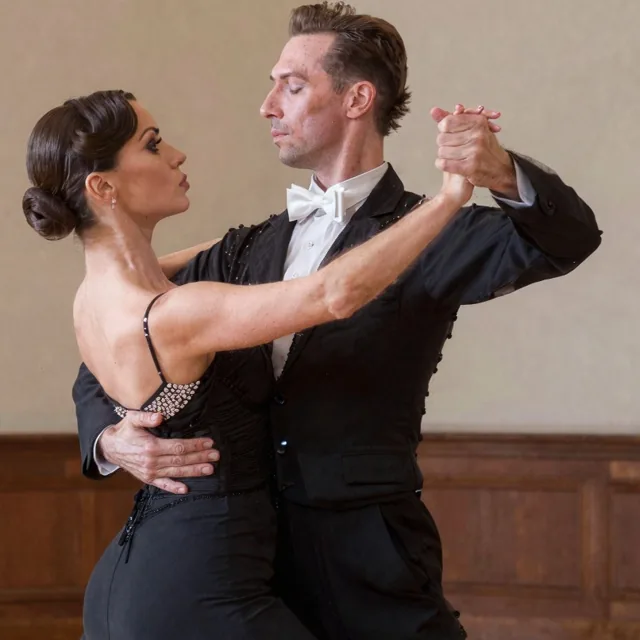
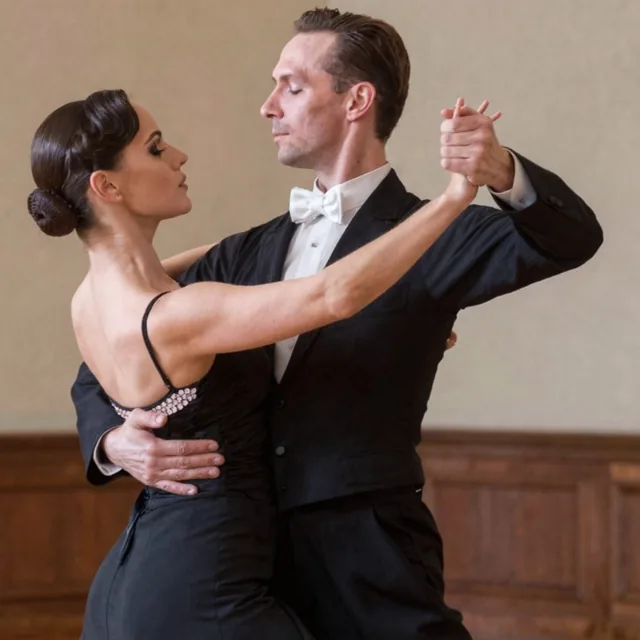
Two other changes went out at the same time, aimed at the most common complaint about AI images: an extra arm, a leg in the wrong place, or two bodies blending together when people hug or dance.
- Pick the clean one. When your prompt has two people together, a hug, or a big movement such as a jump or a kick, our own image models now make one extra candidate. An automatic check looks at each one for extra or misplaced limbs, merged bodies and the wrong number of people, and you get the clean one. You pay for the images you asked for, not the extra one.
- A cleaner finishing pass for α2. Our photo-style model α2 enlarges each image and redraws the details. We changed how it enlarges before that redraw. In our test of 24 hard poses, the problem cases went from 8 to 6, the faint floating fragments around bodies disappeared, and each image finishes about a third faster.
None of this makes mistakes impossible, but it makes them much rarer. Next we are working on fixing the pose first for acrobatic and multi-person scenes, so the body has a correct shape before any detail is drawn.